China’s Center for Disease Control and Prevention has warned that
rhinovirus positive detection rate are rising
With no specific antiviral treatments or vaccines available
prevention remains the best defense.
Rhinoviruses are a leading cause of respiratory illness.
Infants and young children,older adults,and people with weakened immune systems
should be especially cautious,
as infection can progress to lower respiratory tract disease
and may trigger acute flare-ups of asthma or chronic obstructive pulmonary disease(COPD).
01
Understanding"Rhinovirus"
Rhinovirus is a tiny single-stranded RNA virus and one of the most common causes of the common cold.It affects both adults and children,but it is especially prevalent in children and is the leading cause of acute upper respiratory tract infections in this age group.
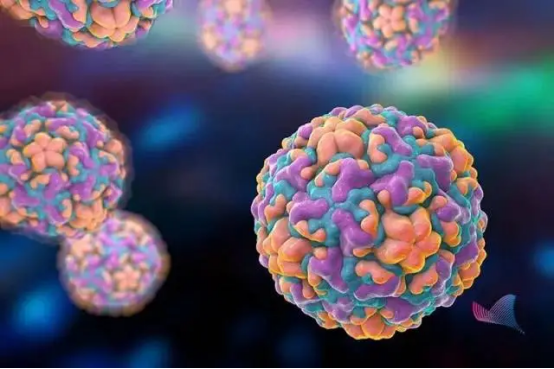
Rhinovirus
Rhinovirus spreads mainly through respiratory droplets and direct contact.The virus can be passed on when an infected person coughs or sneezes,or when someone touches a surface contaminated with the virus and then touches their face.
Influenza viruses tend to cause more widespread,whole-body symptoms,while rhinovirus infections usually affect the upper respiratory tract.Common symptoms include nasal congestion,a runny nose,and sneezing,with only mild systemic effects.
Most healthy people recover from a rhinovirus infection on their own within 7–10 days.However,higher-risk groups—such as infants,older adults,and people with weakened immune systems—should take symptoms seriously,as the infection can spread to the lower respiratory tract and may trigger asthma attacks or acute flare-ups of chronic obstructive pulmonary disease(COPD).
At present,there are no specific drugs or vaccines for rhinovirus.Along with standard non-pharmaceutical prevention measures,strengthening the immune system remains especially important.
02
Hydrogen-Oxygen Boosts Immunity
Immunity acts as the body’s built-in defense system,forming multiple protective layers that help recognize and eliminate invading bacteria and viruses,as well as abnormal or infected cells within the body.
Research suggests that after two weeks of inhaling a high-concentration hydrogen–oxygen mixture,the number of immune cells in the bloodstream increases significantly.Under hydrogen–oxygen inhalation,levels of NK cells(natural killer cells,which play a key role in immune defense)and T cells(T lymphocytes involved in cellular immunity and immune regulation)both rise rapidly[1].
Hydrogen helps regulate immune cell activity and may support a balanced anti-inflammatory response.
For rhinovirus infections that can worsen conditions such as asthma or trigger acute flare-ups of COPD,hydrogen–oxygen inhalation has also shown promising effects.In asthma research,a team led by Professor Zhang Qingling at the State Key Laboratory of Respiratory Diseases explored and clarified the potential role of hydrogen–oxygen inhalation therapy[2].In COPD,a team led by Academician Zhong Nanshan conducted the world’s first multicenter,randomized,controlled trial,demonstrating that hydrogen–oxygen mixture inhalation was more effective at improving respiratory function in patients experiencing acute exacerbations of COPD[3].
Asclepius Meditec reminds you:Winter is peak season for respiratory infections.Take simple steps to lower your risk.Get enough rest,ventilate indoor spaces regularly,and reduce the chance of spread.Enjoy healthy breathing with hydrogen–oxygen inhalation.References:[1]Chen et al.“Two weeks of hydrogen inhalation can significantly reverse adaptive and innate immune system senescence patients with advanced non-small cell lung cancer:a self-controlled study.2020;10(4):149-154[2]Huang P,Wei S,Huang W,Wu P,Chen S,Tao A,Wang H,Liang Z,Chen R,Yan J,Zhang Q.Hydrogen gas inhalation enhances alveolar macrophage phagocytosis in an ovalbumin-induced asthma model.Int Immunopharmacol.2019 Sep;74:105646.[3]Nan‑Shan Zhonget al,Hydrogen/oxygen therapy for the treatment of an acute exacerbation of chronic obstructive pulmonary disease:results of a multicenter,randomized,double-blind,parallel-group controlled trial,BMC,2021


